7-Hydroxymitragynine (7-OH) is an opioid-like, supercharged version of kratom sold at gas stations and smoke shops that has seen a rise in hospitalizations and overdose fatalities.
It can quickly cause dependence, addiction, and severe withdrawal symptoms similar to traditional opioids.
Description of 7-OH
7-Hydroxymitragynine (7-OH-mitragynine), commonly known as 7-OH, is a psychoactive alkaloid derived from the kratom plant.
Many kratom products on the market are synthesized from the most abundant active alkaloid, Mitragynine.
7-hydroxymitragynine is less abundant but significantly more concentrated and potent, which is why it is more dangerous.
It acts as an opioid receptor agonist drug, meaning it binds to the same brain receptors targeted by opioids like hydrocodone, oxycodone, and heroin to produce strong pain relief, sedation, and euphoria.
Since it is concentrated, the substance can quickly deliver intense effects, which is why it has been called “gas station heroin” or “legal morphine.”
It is marketed and sold as a kratom product or supplement in a variety of forms including tablets, capsules, edibles, and liquids.
Unlike legally approved opioid medications, these potent kratom products are sold under the radar as a supplement.
Because they are not regulated or approved for medical use, the chemical composition, strength, and purity can vary widely depending on the manufacturer, the batch, and the product sold.
This increases the risk these products contain harmful adulterants or contaminants.
Why People Use 7-hydroxymitragynine
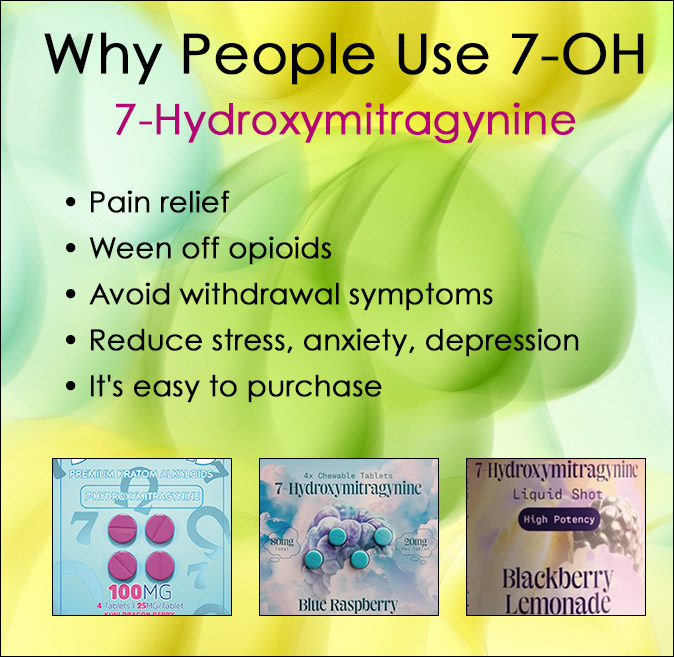
People are attracted to 7-OH because it offers the same qualities of opioids and it is marketed as a safe and natural supplement, like kratom.
Some view it as a natural alternative or substitute for tramadol, oxycodone, and other prescription opioids.
Common reasons people use it include:
- Pain relief
- Ween off opioids
- Avoid opioid withdrawal symptoms
- Reduce stress, anxiety, or depression
- It’s easy to purchase
Unfortunately, just because a product is marketed and sold as a safe supplement, it doesn’t make it true.
Much like opioids and other addictive drugs, many individuals find some initial benefits when they start using it.
Over time, people build a tolerance and need to increase the dose to get the same effects. When they try to quit, they can experience withdrawal symptoms.
7-Hydroxymitragynine Addiction Risks and Health Dangers
Opioids are highly addictive because of the way they bind to receptors in the brain and 7-OH behaves in the same manner.
7-hydroxymitragynine has a high potential for addiction. This means regular use can lead to a tolerance to the drug, a physical dependence, and painful withdrawal symptoms when attempting to stop using it.
An oversimplified analogy would be 7-hydroxymitragynine relates to natural kratom a bit like heroin relates to prescription opioids such as Vicodin.
All of these substances target opioid receptors, but 7-OH and heroin do so in a much more concentrated and forceful way, with a higher addiction risk and more severe withdrawal.
Traditional kratom leaf has relatively low 7-hydroxymitragynine levels and milder opioid-like effects. Concentrated 7-OH-mitragynine products are considered 30 to 40 times more potent than typical kratom, and much more potent than morphine.
While it’s true traditional kratom can cause dependence, these concentrated versions are much more addictive with rapid tolerance and high dependence risk, somewhat paralleling the relationship of heroin and prescribed opioids.
Polysubstance abuse increases the risks, and when mixed with alcohol or other substances at high doses, the opioid-like qualities of 7-hydroxymitragynine can cause respiratory depression leading to an overdose.
As with other addictive drugs, it also amplifies the symptoms of mental health issues like depression, anxiety, and insomnia.
Physical symptoms include nausea, vomiting, irregular heart rate, and liver damage.
7-OH Withdrawal Symptoms
7-OH withdrawal symptoms mimic those of opioid withdrawal because the drug targets mu-opioid receptors in the brain.
Compared to the side effects of kratom withdrawal, 7-OH-mitragynine withdrawal is much more intense with an earlier onset like opioids.
Health professionals have reported patients as saying it is worse than opiates.
Many users report severe flu-like symptoms that last for days when trying to quit. This is a classic sign of addiction and one of the most dangerous consequences of using 7-hydroxymitragynine.
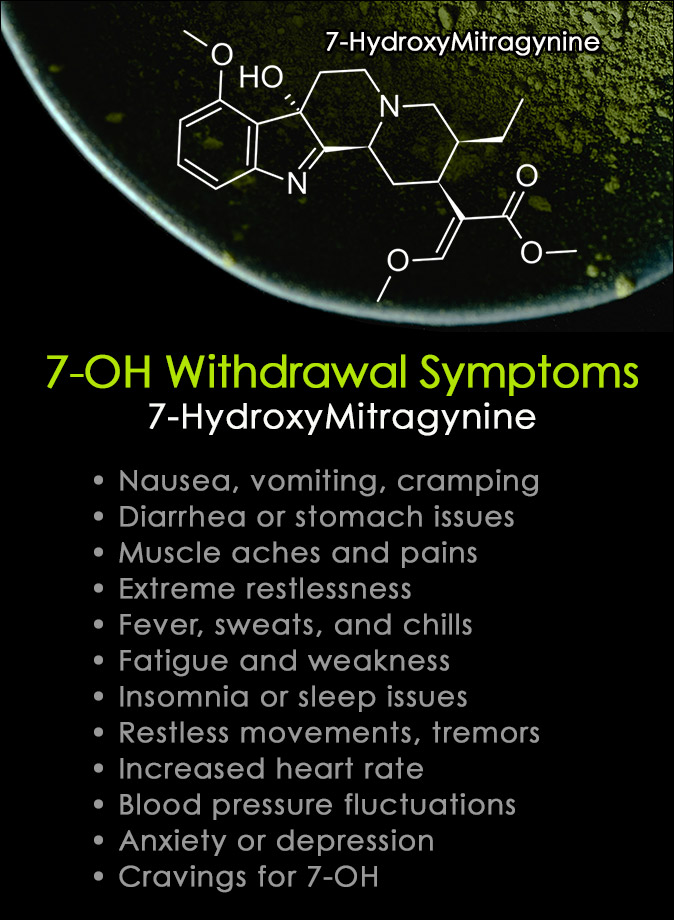
Withdrawal Symptoms can include:
- Nausea, vomiting, and abdominal cramping
- Diarrhea and gastrointestinal issues
- Intense muscle aches and pains
- Extreme restlessness
- Fever, sweats, and chills
- Fatigue and body weakness
- Insomnia or other sleep issues
- Restless movements and tremors
- Increased heart rate
- Blood pressure fluctuations
- Mood swings, anxiety, depression, and anhedonia
- Cravings to use 7-hydroxymitragynine for symptom relief
Depending on the frequency and duration of use, as well as the amount regularly consumed, the withdrawal symptoms can begin within a few hours after the last dose or sometime the following day.
The most extreme symptoms will usually be felt within the first 24 to 72 hours and can feel like a severe flu. Cravings will be intense during this period.
Most withdrawal symptoms will subside after about a week, though post-acute PAWS symptoms like cravings and emotional disturbances may continue for weeks or months for heavy, chronic users.
7-OH Addiction and Withdrawal Treatment
7-OH addiction and withdrawal treatment follows the same protocols as evidence-based treatment for opioids.
Detox Treatment
Treatment begins with a medically supervised detox to address uncomfortable withdrawal symptoms, monitor the individual during the process, reduce cravings, and avoid relapse.
Detox often lasts for 5 to 7 days depending on the individual, and medications may be used to keep the patient comfortable.
After detox has been completed, a residential opioid treatment program addresses the issues of addiction.
Recovery Treatment Phase
Depending on the causes and nature of addiction, a number of evidence-based therapies have shown to be effective for long-term recovery. These include:
- Individual and Group Therapy
- Cognitive Behavioral Therapy
- Motivational Enhancement Therapy
- Dialectical Behavior Therapy
- Relapse Prevention Therapy
- Medication-Assisted Treatment
If necessary, Medication Assisted Treatment (MAT) offers partial opioid agonist medications like Buprenorphine to mitigate cravings during recovery. Other medications can help reduce anxiety and related symptoms.
Outpatient programs and peer support groups offer continuing care after residential treatment has concluded.
Frequently Asked Questions
What does 7-OH feel like?
Many people say 7-OH feels much like hydrocodone and other opioids with both positive and negative effects.
It generally has stimulant effects in lower doses and opiate-like effects in higher doses.
Low Dose Effects
- Physical and mental sense of relaxation
- Reduced pain
- Emotional euphoria
- Overall warm and floaty feeling
- Stimulating effects
Effects of Higher Doses
- Drowsy, sedated feeling
- Dizziness
- Nausea
- Confused thinking or brain fog
- Itchy skin
- Sweaty or clammy skin
- Slowed breathing
- Anxiety and irritability
As the dose wears off, anxiety, irritability, and pain or body aches can increase.
How strong is 7-Hydroxymitragynine compared to other opioids like Vicodin, morphine, heroin, and fentanyl?
It’s difficult, and potentially misleading, to accurately compare the strength of 7-Hydroxymitragynine products to other opioids, because it does not have standardized manufacturing protocols and there is a lack of scientific testing on humans.
There is no standard ‘human equivalent dose’ for 7-OH, like with Vicodin or morphine.
Because it is not regulated, products labeled as containing 7-OH-mitragynine can vary widely depending on the brand, batch, or manufacturer. It is also synthesized instead of extracted naturally, which plays a role in determining the strength.
Drugs like oxycodone, heroin, morphine, and fentanyl are full opioid agonists, whereas 7-OH is a partial agonist, so comparing the strengths won’t be entirely similar.
The onset of delivery for each drug can differ, as well as the acting properties. Some are stronger for pain with less respiratory depression than others.
With that said, 7-OH is much more potent than Mitragynine (the active ingredient in standard Kratom products). Some estimates have shown it to be anywhere from 7 to 40 times stronger than morphine depending on the brand, although it is less potent than fentanyl.
The key takeaway is 7-OH-mitragynine is a very potent opioid substance. The lack of manufacturing standardization and regulated labeling make it challenging for users to know the precise strength or ingredients they are getting each time they use it.
How long does 7-OH last and how long does it stay in your system?
7-OH is similar to short-acting opioids, with the effects lasting several hours, although it can remain in the system for a few days depending on the dose, frequency of use, and metabolism.
The onset usually takes place within 30 to 60 minutes after ingesting and the effects last for 2 to 5 hours for most people, with higher doses lasting slightly longer.
How does 7-Hydroxymitragynine withdrawal compare to kratom or opioid withdrawal?
7-Hydroxymitragynine, kratom, and opioids all produce similar withdrawal symptoms, but they vary in intensity.
Developing a dependence for 7-oh-mitragynine products is comparable to opioids, which occurs much more quickly than with kratom.
The withdrawal symptoms can be compared to many opioids, although much more severe than kratom.
This can give regular kratom users a false sense of safety when using 7-hydroxymitragynine. Many will incorrectly think that because they used kratom for years without any issues, 7-OH will be the same, but it’s not.
All three substances share similar withdrawal symptoms that include:
- Muscle aches and pains
- Chills and sweating
- Nausea or vomiting
- Stomach cramps and diarrhea
- Anxiety, irritability, or depression
- Insomnia and sleep issues
- Confusion
- Drug cravings
The difference lies in the severity of symptoms for each of the substances.
Kratom symptoms are much milder than opioids or 7-OH withdrawal.
Opioid and 7-OH withdrawal symptoms are more intense and painful. This increases the risk of relapse because people will continue to use the drug to avoid the extreme flu-like symptoms.
Kratom dependence can sometimes be managed with outpatient treatment. Opioids and 7-OH-mitragynine usually require medically supervised inpatient detox treatment because of the severity of symptoms and risk of relapse.
What is the legal status of 7-OH products in the United States?
At the Federal level, 7-OH is considered an unapproved, illegal opioid ingredient with no approved medical use.
The FDA has issued warning letters and already confiscated many products on the market. The DEA is currently working on formally scheduling the substance under the Controlled Substances Act.
At the state level, 7-OH and kratom-related products have been banned in some states for sale and manufacture, with others pushing through emergency measures to ban the substances because of the dangers to the public.
La Quinta, California, in Coachella Valley, passed an ordinance in January 2026 limiting the sale of Kratom and 7-hydroxymitragynine.
Where do people get 7-OH?
Even though 7-OH products are federally illegal and carry significant health risks, they are largely unregulated and relatively easy to find online or in retail stores that sell other kratom products.
- Gas stations
- Online websites
- Convenience stores
- Smoke shops
- Supplement stores
- Research chemical suppliers
These products are often marketed as enhanced kratom extract or alkaloid in the form of tablets, pills, powders, gummies, and liquid shots.
How many people use 7-OH?
It’s difficult to know exactly how many people use 7-Hydroxymitragynine because it is relatively new, and many people only report using kratom instead of 7-OH.
While millions of people in the United States have used kratom, only a small percentage have tried 7-OH, although emergency rooms and health agencies have noticed the numbers have grown in the past year.
Have people been hospitalized or died from 7-OH?
Yes, there are documented cases of 7-OH hospitalizations and fatal overdoses in the United States and the numbers are increasing.
Many of the medical emergencies involved individuals taking high doses and mixing it with alcohol and other substances.
In September 2025, the Los Angeles Medical Examiner issued a news release about three fatal overdoses in LA County alone.
Because 7-OH overdoses are similar to other opioids, naloxone or Narcan can be effective for reversing the effects if administered in a timely manner.